what was the first organization formed to protect free speech in the united states?

10b. Commencement Amendment Rights
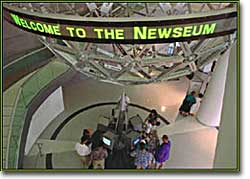
The Newseum, located in Arlington, Virginia, is a museum of news and press freedom. Thanks to the guarantees of the First Subpoena, Americans accept freer access to news than people in about countries.
"Congress shall make no constabulary respecting an establishment of religion, or prohibiting the free exercise thereof; or abridging the freedom of speech, or of the press; or the right of the people peaceably to gather, and to petition the government for a redress of grievances." -Outset Subpoena to the Constitution
A careful reading of the First Amendment reveals that it protects several basic liberties — liberty of religion, speech, press, petition, and assembly. Interpretation of the amendment is far from piece of cake, equally court case after courtroom case has tried to ascertain the limits of these freedoms. The definitions have evolved throughout American history, and the process continues today.
Liberty of Religion

Deborah Weisman was a Jewish student who successfully sued her public school district in Rhode Island over a Christian graduation prayer in 1986. In her case, Weisman cited the First Subpoena's clause against the state establishing whatsoever religion.
The Beginning Amendment guarantees freedom of religion in two clauses — the "establishment" clause, which prohibits the government from establishing an official church, and the "free do" clause that allows people to worship as they please. Notice that the phrase "separation of church and state" does not appear in the Starting time Amendment, nor is it found anywhere else in the Constitution. Most people do non realize that the phrase was actually coined later by Thomas Jefferson. In 1802, when he was President, he wrote the opinion that the Offset Amendment's liberty of religion clause was designed to build "a wall of separation between Church and State."
Court cases that address freedom of religion have dealt with the rejection of prayer in public schools, the denial of aid to parochial schools, the banning of polygamy (the do of having more than i wife), the restriction of poisonous snakes and drugs in religious rites, and limiting the right to decline medical treat religious purposes.
Freedoms of Speech and of the Press
Free spoken language is one of the well-nigh cherished liberties, but free speech frequently conflicts with other rights and liberties. The courts accept had to consider the question, "What are the limits of complimentary voice communication?"
The "articulate and present danger" examination is a basic principle for deciding the limits of free speech. It was set by the famous Schenck v. the United States case from World State of war I. Antiwar activist Charles Schenck was arrested for sending leaflets to prospective army draftees encouraging them to ignore their draft notices. The The states claimed that Schenck threatened national security, and the justices agreed. The principle was established that complimentary spoken language would not be protected if an individual were a "clear and present danger" to Usa security.
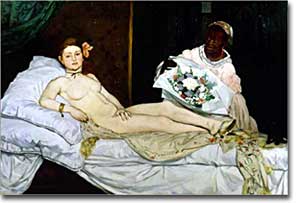
Manet's Olympia was considered obscene in 1865, but today is considered a masterpiece. Every bit tastes in the arts change, the legal definitions of obscenity and gratuitous expression change likewise.
What is free speech communication? The definition is non easy, and the courts have identified three types of free speech, each protected at a different level:
- Pure speech is the verbal expression of thoughts and opinions earlier a voluntary audience. The courts have mostly provided stiff protection of pure speech from government regulation.
- Speech-plus involves actions, such every bit demonstrating or protesting, as well as words. Spoken language-plus is non more often than not protected as strictly as is pure speech, considering actions can be physically dangerous. The courts have ruled that demonstrators may not obstruct traffic, endanger public safety, or trespass illegally.
- Symbolic speech technically involves no speech at all, but information technology involves symbols that the courts have judged to exist forms of free expression. Symbolic actions such equally wearing black armbands in school and draft-carte du jour called-for fit this category. Symbolic speech is highly controversial, and as a dominion, the courts have sometimes considered it to be beyond the limits of free speech. However, the Supreme Court did uphold the right of an individual to burn an American flag in the 1989 Texas vs. Johnson decision.
Many of the same principles that apply to freedom of speech communication apply to the press, only one with special meaning for the press is prior restraint. The courts have ruled that the regime may not conscience information before it is written and published, except in the virtually extreme cases of national security.

Freedom of Assembly and Petition
Freedom of assembly and petition are closely related to freedom of speech, and have been protected in similar ways. Former Chief Justice Charles Evans Hughes wrote, "Peaceable assembly for lawful word cannot exist made a crime." Generally, that point of view has prevailed. Freedom of assembly has to exist balanced with other people'south rights if it disrupts public order, traffic flow, freedom to become about normal business or peace and tranquillity. Usually, a group must utilise for a allow, simply a government must grant a allow provided that officials accept the means to prevent major disruptions.
For over 100 years after the ratification of the Constitution, the First Amendment protected these freedoms only in theory. As individuals in the 20th century have challenged the government in the courts when they believed their rights were assaulted, the Showtime Amendment has taken on a stronger meaning. It remains the single most powerful instrument for protecting the sacred freedoms of religion, speech communication, press, assembly, and petition for modern Americans.

If you like our content, delight share it on social media!


Source: https://www.ushistory.org/gov/10b.asp
0 Response to "what was the first organization formed to protect free speech in the united states?"
Postar um comentário